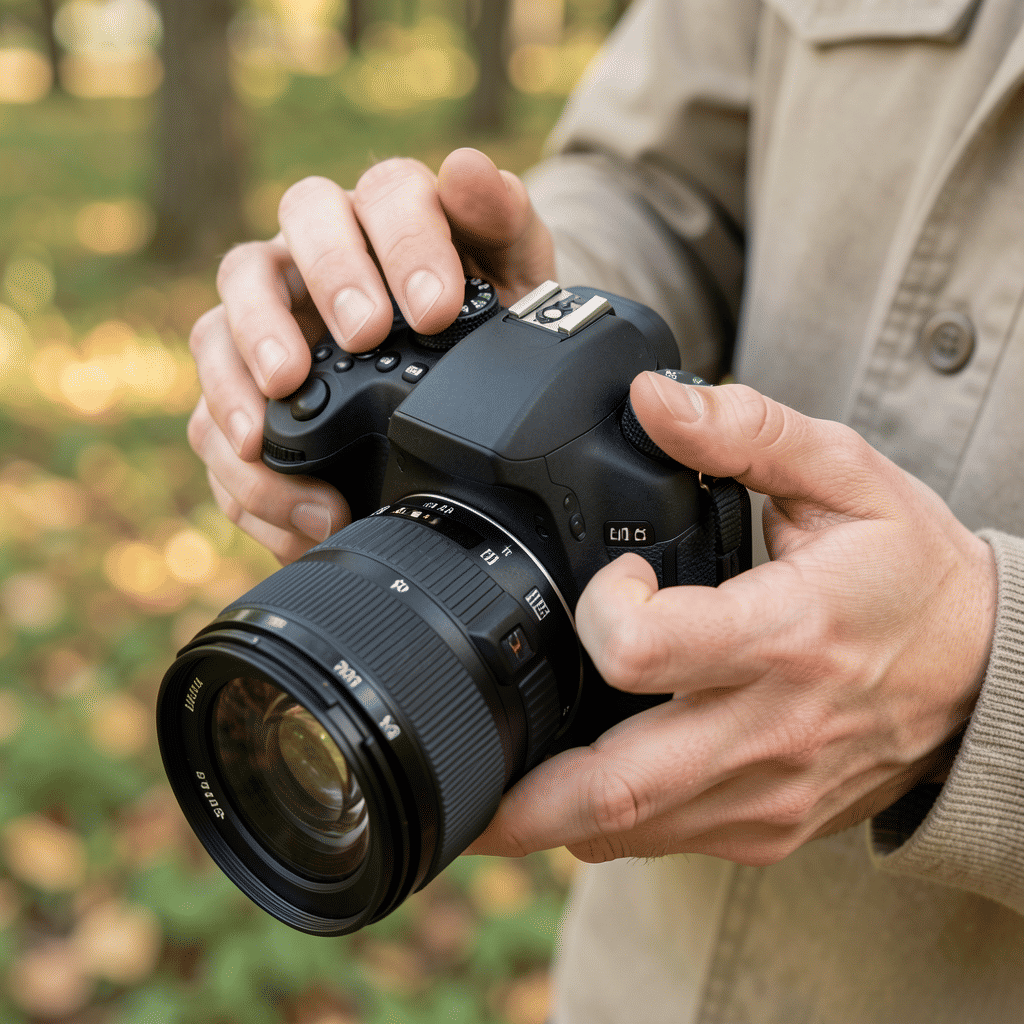
Photography is an art form that marries technology with creativity, allowing photographers to capture the beauty of the world through their lenses. To become proficient in this art, understanding essential camera techniques is paramount. Every photographer, whether a novice or seasoned professional, can benefit from mastering these foundational skills.
One of the core aspects of photography is managing the aperture. The aperture is the opening within a lens through which light passes to enter the camera. It is measured in f-stops, such as f/1.8, f/2.8, f/11, and so on. A lower f-stop number means a larger aperture opening, allowing more light to hit the camera sensor. This setting is ideal for achieving a shallow depth of field, where the subject is sharp against a softly blurred background, perfect for portraits. Conversely, a higher f-stop number results in a smaller opening, offering a greater depth of field that is suitable for landscapes where you want everything in clear focus.
Equally important is understanding shutter speed, which determines how long the camera's shutter remains open to light. Measured in fractions of a second, such as 1/500 or 1/30, it influences how motion is captured in a photograph. Fast shutter speeds can freeze action, making them ideal for sports or wildlife photography. On the other hand, slow shutter speeds are used to convey motion, like the gentle blur of water cascading over rocks or light trails of car headlights at night.
The ISO setting is another crucial component, dictating how sensitive the camera sensor is to light. Lower ISO settings, like ISO 100 or 200, ensure higher image quality with less grain, suitable for brightly lit scenes. Higher ISO settings, such as ISO 1600 or 3200, increase sensitivity, allowing for shooting in darker conditions. However, this can introduce noise into the image, so balancing ISO with aperture and shutter speed is key to maintaining image clarity.
Another vital technique is composition, which is the art of arranging subjects within the frame to create a visually appealing image. The rule of thirds is a classic guideline suggesting that the main subject should be placed along two vertical or horizontal lines that divide the image into thirds. This technique helps in creating balance and interest. Leading lines, such as roads or rivers, guide the viewer’s eye through the photograph, creating a narrative flow. Experimenting with angles and perspectives also enhances composition, offering new and exciting viewpoints of familiar scenes.
Mastering focus is essential, ensuring that the subject is sharp and clear. Understanding and using autofocus points can simplify this process, especially in dynamic environments. However, manual focus provides precision and control, crucial for macro photography or in scenarios where autofocus struggles, such as low-light situations.
Lastly, being aware of lighting, both natural and artificial, significantly impacts the mood and quality of a photograph. The golden hour, shortly after sunrise or before sunset, provides a soft, warm light that is flattering for almost any subject. In contrast, midday light can be harsh, creating strong shadows. Reflectors and diffusers can help manage and modify lighting conditions, allowing for creative experimentation.
In conclusion, mastering these essential camera techniques gives photographers the tools they need to translate their creative vision into compelling images. By continuously practicing and experimenting with aperture, shutter speed, ISO, composition, focus, and lighting, photographers can hone their skills and expand their artistic expression.